

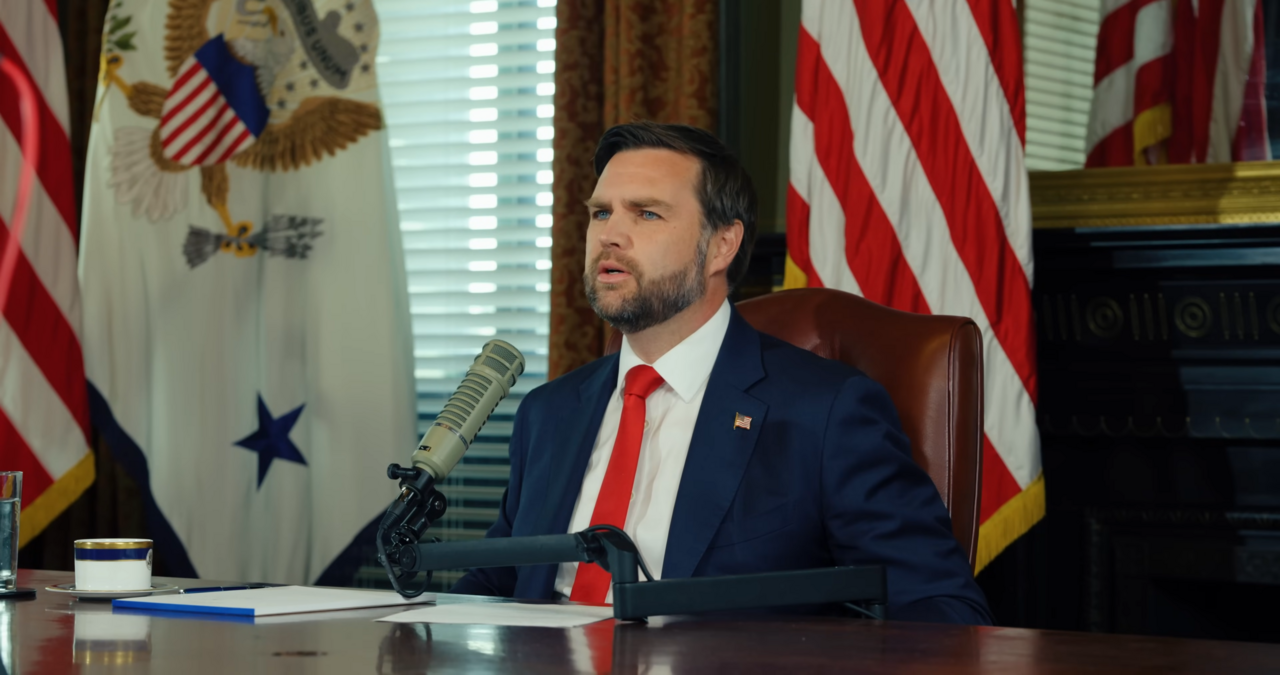
Democrats are taking a smug victory lap over midterm wins a neocon war handed them.
Now the GOP’s big-money crowd wants to anoint its next nominee before voters say a word.
But the folks who actually cast primary ballots just weighed in, and the checkbook set won’t like it.
The Room That Voted First
Go back to the first night of the Iran war in 2026.
American and Israeli strikes were hitting Iran, and President Trump was at Mar-a-Lago with top administration officials and about 25 Republican donors. New England Patriots owner Robert Kraft was in the room. So was Georgia gubernatorial candidate Rick Jackson.
Trump asked them who they wanted him to back for president in 2028.
Two attendees told NBC News the crowd cheered overwhelmingly for Secretary of State Marco Rubio.
“It was almost unanimous for Marco,” one of them said.
A third guest remembered it as closer to an even split. And a former administration official told NBC that this donor crowd had never warmed to Vice President JD Vance, and had even lobbied Trump to pick Rubio as his running mate in 2024. That same official called these informal room polls “a bit gamed.”
Gamed or not, the story spread fast. Washington reporters spent the spring writing that the war had lifted Rubio and pushed Vance to the edge of the frame. Donors started quietly talking up a Rubio bid for after the midterms.
It was a show of hands over dessert, and the political class treated it like a primary result.
Then the Real Primary Voters Spoke
An Economist/YouGov survey taken after the midterms asked Americans who plan to vote in the 2028 Republican primaries to name their candidate. Nobody handed them a list.
Vance finished first with 40 percent. Rubio drew 33 percent, and Florida Governor Ron DeSantis landed at 14 percent.
Among voters who call themselves MAGA, the gap grew to 45 percent for Vance and 35 percent for Rubio.
That second number tells the bigger story. MAGA voters are the ones who pack Iowa school gyms in the dead of winter and fill out the ballots in South Carolina church basements. They decide nominations. Guests at a Palm Beach dinner don’t.
And Vance hasn’t even said he’s running. He told Laura Ingraham on Fox News that he would “figure it out sometime next year.”
“My understanding is that with the presidential campaign there is a lot of infrastructure that you have to set up . . . and so you cannot declare a month before the Iowa caucus,” Vance said.
“When I make a decision, I will be all-in on whatever that decision is,” he added.
Rubio has gone quiet. Reporters asked him whether he still stands by his old pledge to be the first to back Vance if Vance runs. “I’m not going to discuss 2028. I’m not going to discuss it in any form or fashion,” Rubio said, according to Newsweek. One reporter tried asking about 2032. Rubio laughed and said, “Not even.”
That’s a long way from a promise to be first in line.
The War Split the Room
The two men are friends. Vance has called Rubio his “best friend” in the administration. But personality isn’t what divides them. Iran is.
According to NBC, Vance had reservations about attacking Iran before the strikes. He went on to lead the push for a negotiated settlement. After the midterms, he said plainly that the war cost Republicans, and President Trump told reporters Vance’s assessment was “largely true,” even as he stood by his own decision.
Rubio took the opposite road. At the Federalist Society’s annual lawyers convention, in his first big speech since the election, he defended the war and admitted it had a political price.
“It’s not easy to address these things because it’s not popular to address them,” Rubio said.
He has that much right. In the NBC News exit poll, 63 percent of midterm voters called the military action against Iran the wrong decision, and 83 percent of those voters backed Democrats. Voters who called immigration enforcement crucial, meanwhile, went Republican 58 to 40.
The deportation agenda held. The war sank the ship.
So the donors cheered for the man most tied to the war. And the base leaned toward the man who wanted out of it.
Who This Crowd Backed Last Time
None of this is new for the GOP’s donor class. Their record shows how they pick.
In 2013, Rubio joined the Senate’s Gang of Eight and helped write the amnesty bill that passed the Senate 68 to 32 before House conservatives refused to take it up. The US Chamber of Commerce backed it. Republican voters hated it.
Three years later, those same deep-pocketed insiders turned to Rubio as their last hope to stop Donald Trump. The checks came in by the stack.
The votes never followed.
But the donor class rarely learns from losing, because losing never costs it much. A billionaire who backs the wrong horse in a primary still owns the team on Sunday. The retired machinist in Ohio who pays $4 a gallon for a war he never wanted has no such cushion.
And that explains why the two groups keep landing in different places.
The race isn’t settled. The Iowa caucuses are more than a year off, and Vance says he won’t decide until sometime in 2027. Rubio can resign from the State Department and run, an exit a sitting Vice President doesn’t have. The donors will keep cheering, and they’ll keep writing checks.
But the voters do the picking, not the guests doing the cheering.
Those donors bet on Marco Rubio once before. In 2016, he lost his own home state of Florida to Donald Trump by nearly 19 points and dropped out the same night.
Sources: Newsweek, “JD Vance is MAGA’s choice for 2028”; YouGov, Economist/YouGov Poll, November 9-11, 2026; NBC News, “Iran war elevates Marco Rubio in Trump’s 2028 succession jockeying”; Newsweek, “Marco Rubio’s Path to the White House in 2028 Takes Shape”; The National Herald, “Rubio Acknowledged ‘People Are Struggling’ Economically in Earlier Speech after GOP Midterm Wipeout”; The National News Desk, “JD Vance says he wants to focus on midterms before discussing a 2028 presidential run”; The Hill, “JD Vance-Marco Rubio rivalry put into sharp contrast by Iran war”; Fox News, The Ingraham Angle; NBC News Exit Poll, 2026 midterms